Archives
-
Science and Sustainability in Agricultural Production
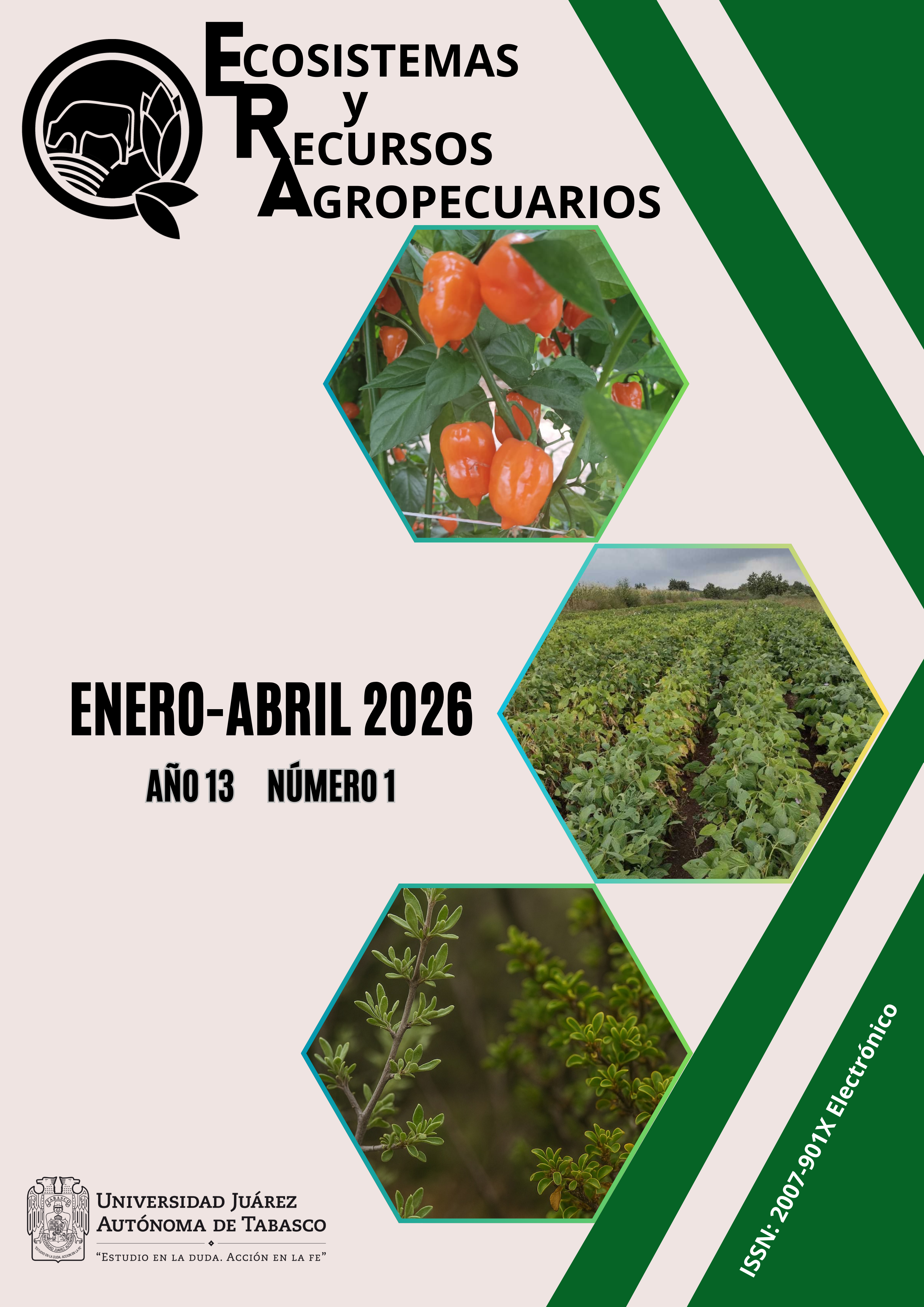
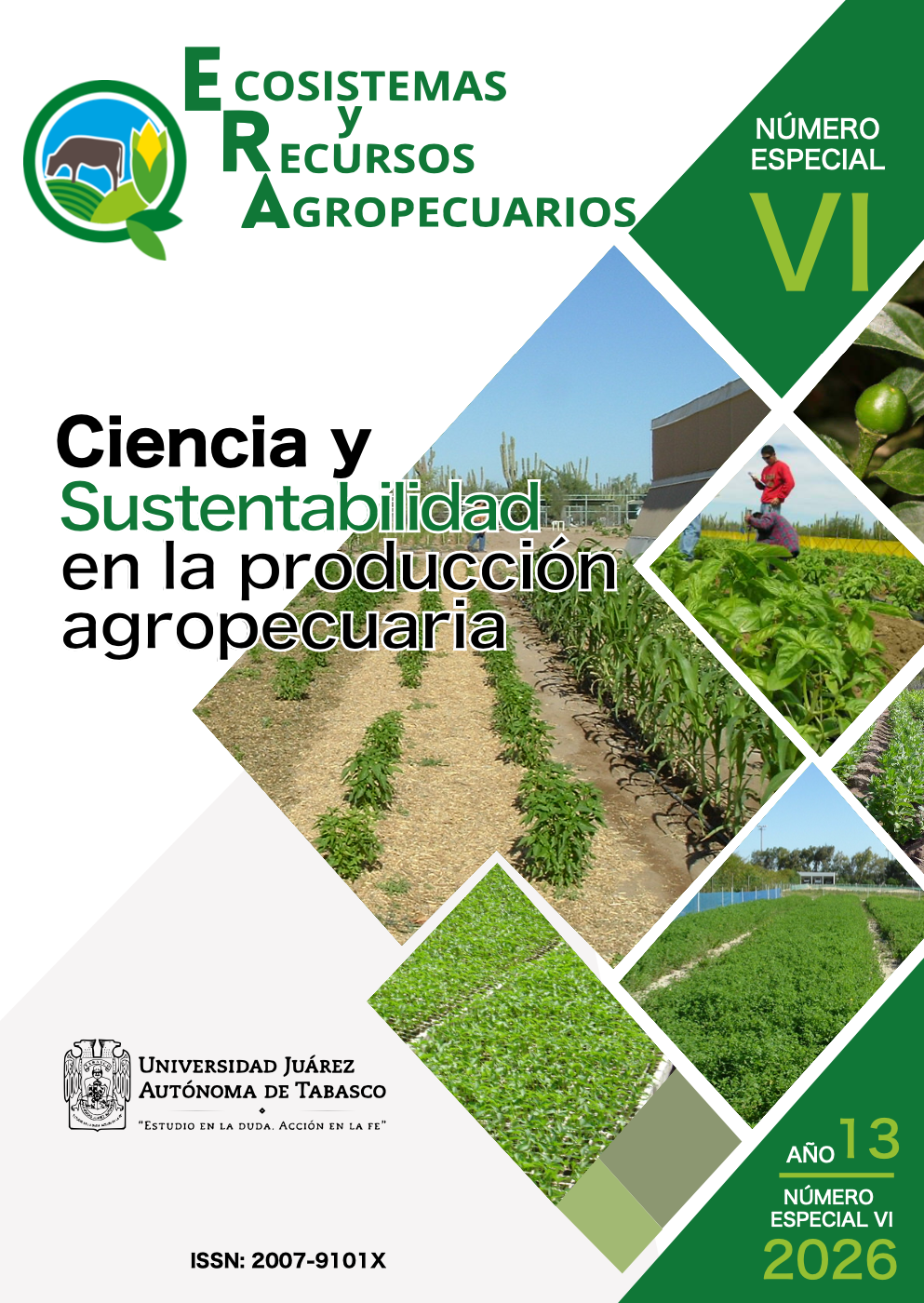
Vol. 13 No. VI (2026)Photographs of chiltepín chili and basil crops, provided by Dr. José Luis García Hernández, appear at the top of the cover design.
Photographs of agricultural seedlings under field conditions and during production management, featured at the bottom of the cover design, were provided by Alonso Hernández Ponce, Eng.
Both authors are affiliated with the Juárez University in the State of Durango.
-
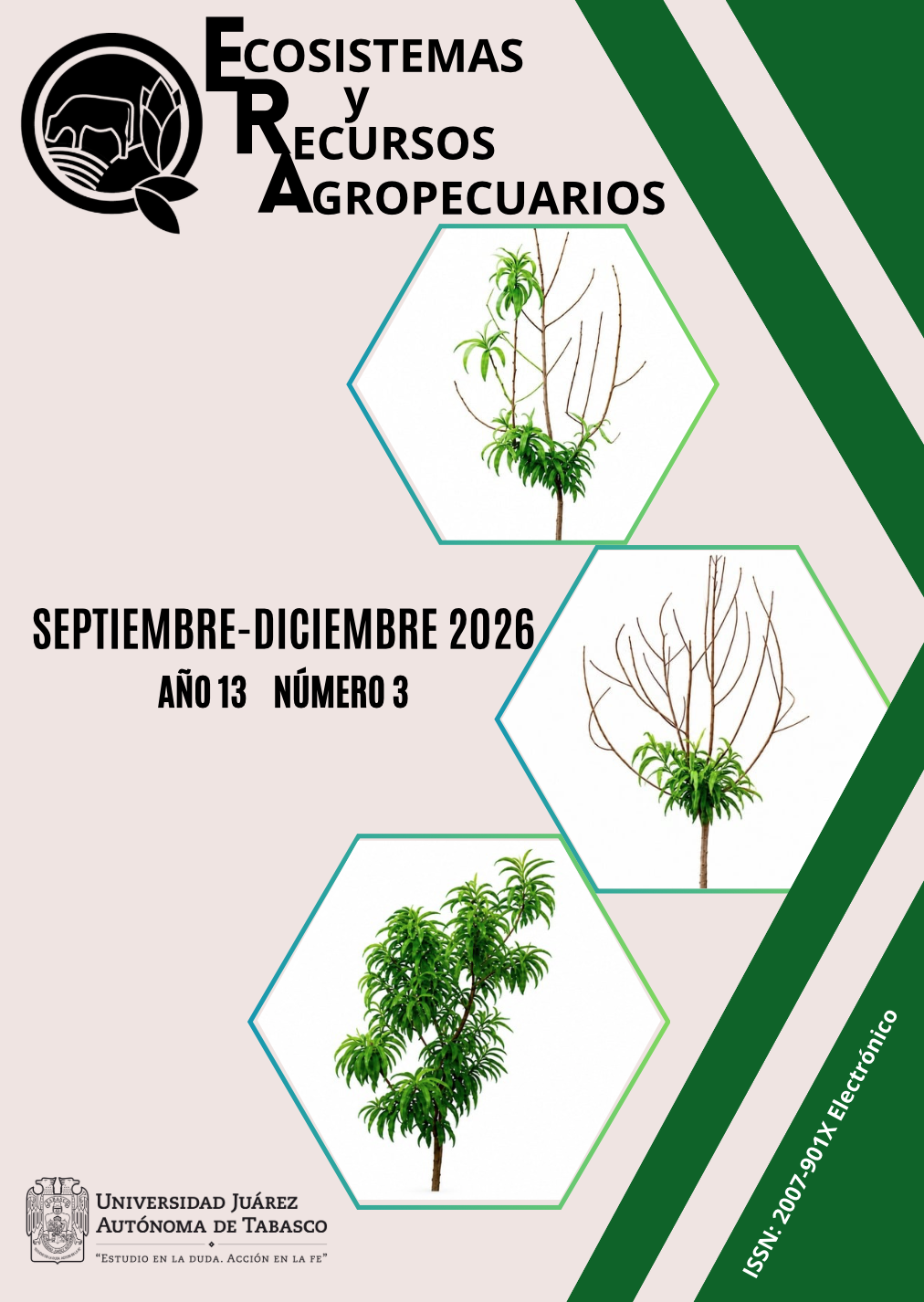
SEPTIEMBRE-DICIEMBRE
Vol. 13 No. 3 (2026)Photographs: The top and middle images show peach plants affected by the fungus Alternaria tenuissima. The plant in the bottom image is a healthy peach tree treated with Lippia graveolens extract.
Photographer: Belén G. Muñoz Rocha. Universidad Autónoma Agraria Antonio Narro. Rocha071295@outlook.com
-
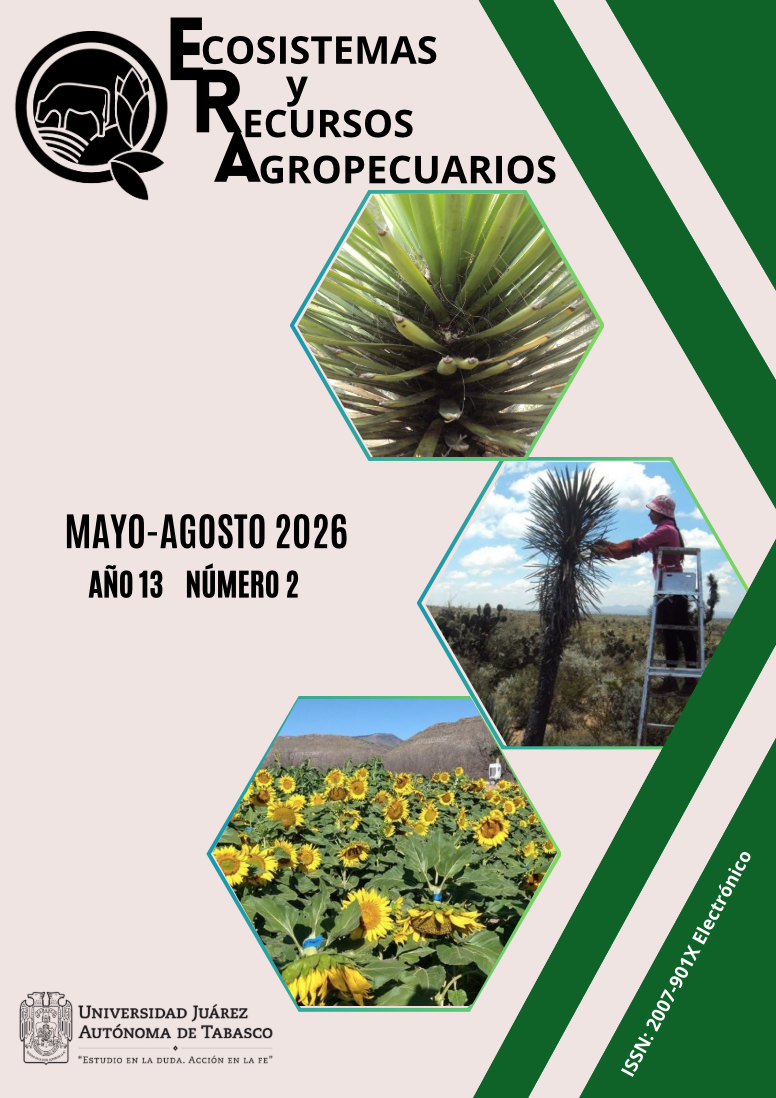
MAYO-AGOSTO
Vol. 13 No. 2 (2026)Top photo: Foliage of Yucca sp. With scale insects (Sternorrhyncha: Coccoidea) from the families Pseudococcidae and Coccidae. Department of Soils, Universidad Autónoma de Chapingo. Photo collection: elizabethroddel@gmail.com
Middle photo: A specimen of Yucca sp. With scale insects (Sternorrhyncha: Coccoidea) in the xerophytic scrubland of Villa González Ortega, Zacatecas. Department of Soils, Universidad Autónoma de Chapingo. Photo collection: elizabethroddel@gmail.com
Bottom photo: Experimental stands of high-oleic sunflower (Helianthus annuus L.) established at the Buenavista experimental field, UAAAN, spring-summer 2022. Romeo Velasco Santiago. Universidad Autónoma Agraria Antonio Narro. Romeovel20@gmail.com
-
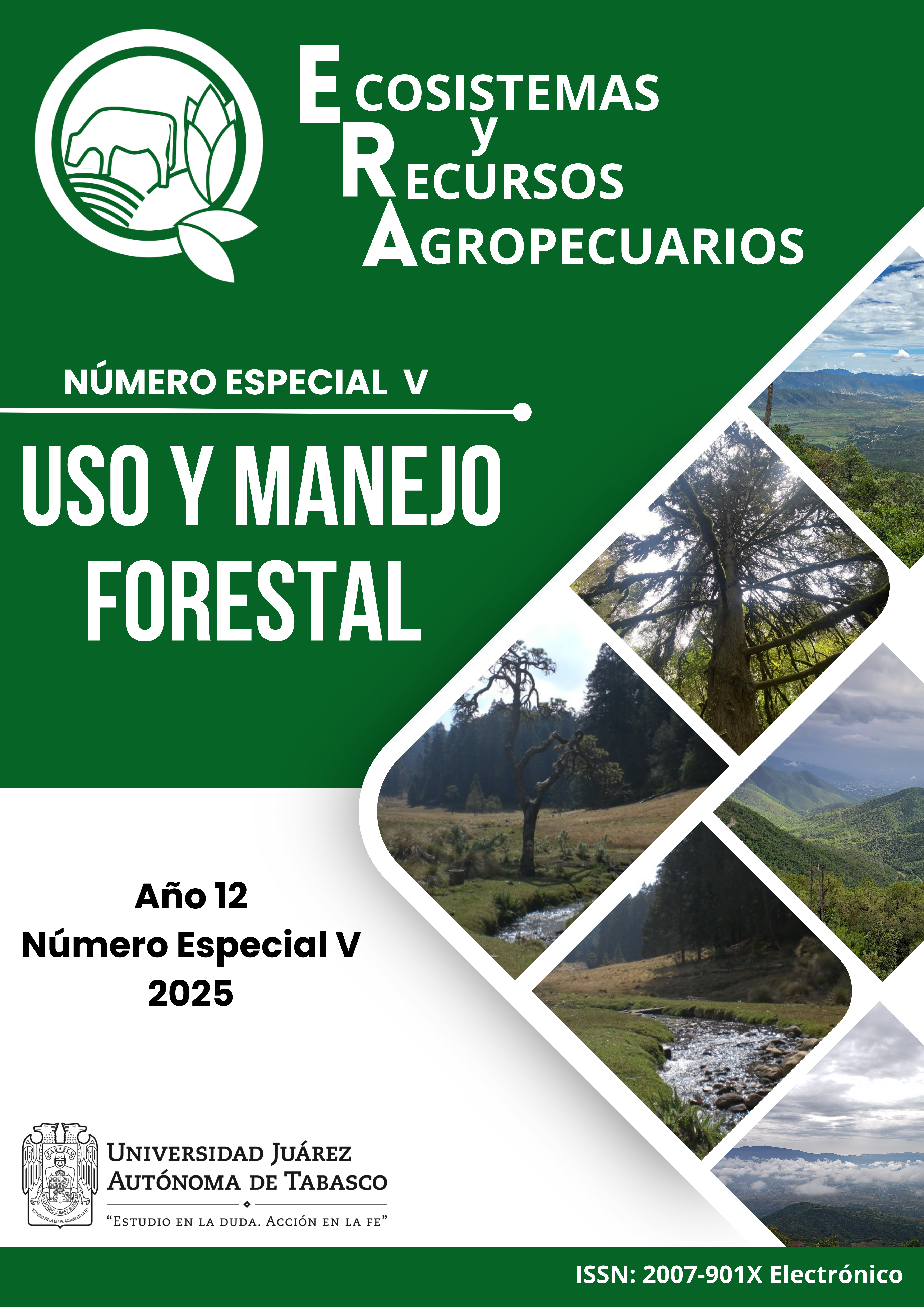
Forest use and management
Vol. 12 No. V (2025)1. Autumn Nostalgia (La Ciénega, Raíces, Nevado de Toluca Flora and Fauna Protection Area, Estado de México). Tizbe Teresa Arteaga Reyes. Institute of Agricultural and Rural Sciences. Universidad Autónoma del Estado de México. ttarteagar@uaemex.mx
2. The Bubble, oyamel forest (Amecameca Communal Lands, Estado de México). Carlos Rubén Aguilar Gómez. Valle de Bravo Institute of Higher Studies. Carlos.ag@vbravo.tecnm.mx
3. Pinus hartwegii Forest (Cerro El Potosí, Galeana, Nuevo León, Mexico). Eduardo Estrada. Facultad de Ciencias Forestales—UANL. aeduardoestradac@prodigy.net.mx
Photographs in the second row, from left to right
1. Renewing Ourselves (La Ciénega, Raíces, Nevado de Toluca Flora and Fauna Protection Area, State of Mexico). Tizbe Teresa Arteaga Reyes. Institute of Agricultural and Rural Sciences. Universidad Autónoma del Estado de México. ttarteagar@uaemex.mx
2. Sunny Path. Gisela Virginia Campos Angeles. Institution: TecNM / Instituto Tecnológico del Valle de Oaxaca. Gisela.ca@voaxaca.tecnm.mx
Photo in the third row
1. Valley of Clouds. Gisela Virginia Campos Angeles. Institution: TecNM / Instituto Tecnológico del Valle de Oaxaca. Gisela.ca@voaxaca.tecnm.mx
-
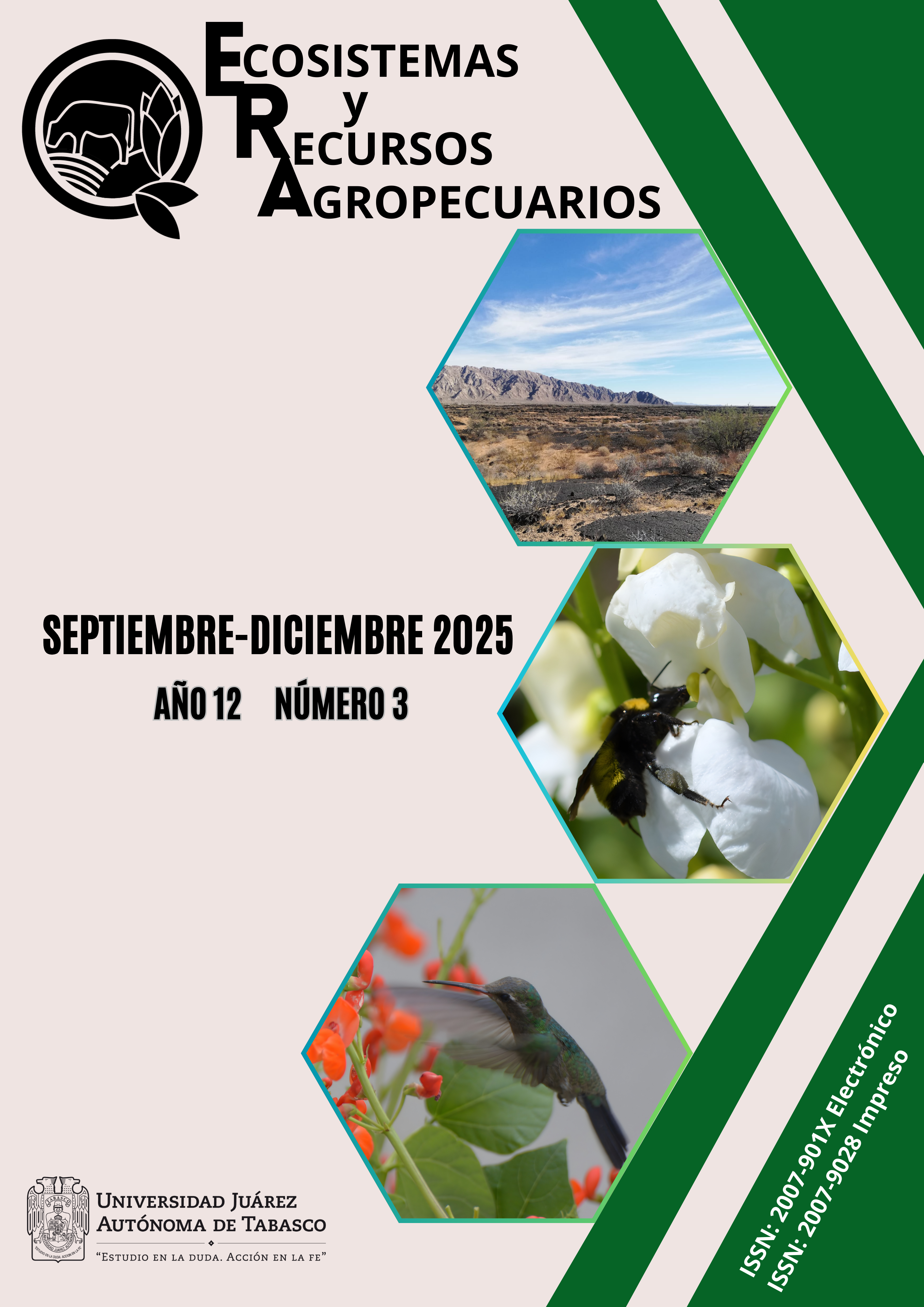
SEPTIEMBRE-DICIEMBRE 2025
Vol. 12 No. 3 (2025)Top photo: Lava flows with the Sierra Blanca in the background. El Pinacate and Gran Desierto de Altar Biosphere Reserve in Sonora.
Photographer: León Alejandro Cáñez Cota. Universidad de Sonora. Economic- administrative department. Campus Caborca. Email: alejandro.canez@unison.mx
Middle photo: A bumblebee collecting nectar from Phaseolus coccineus.
Photographer: Karina Alejandra Cué Hernández. Colegio de Postgraduados Campus Puebla. karyscye@gmail.com
Bottom photo: Cynanthus latirostris approaching an inflorescence of Phaseolus coccineus.
Photographer: Karina Alejandra Cué Hernández. Colegio de Postgraduados Campus Puebla. karyscye@gmail.com
-

MAYO-AGOSTO 2025
Vol. 12 No. 2 (2025)Top photo: Mexican tree frog, Smilisca baudinii. Photographer: Aldo Jonathan Ortiz Guzmán. Universidad Veracruzana. aldo_jona009@hotmail.com
Middle photo: Morelet’s crocodile (Crocodylus moreletii).
Photographer: Aldo Jonathan Ortiz Guzmán. Universidad Veracruzana. aldo_jona009@hotmail.com
Bottom photo: Pink-bellied spiny lizard (Sceloporus variabilis).
Photographer: Mario Torres Sebastian. Universidad Veracruzana. biolmariotorress@gmail.com
-
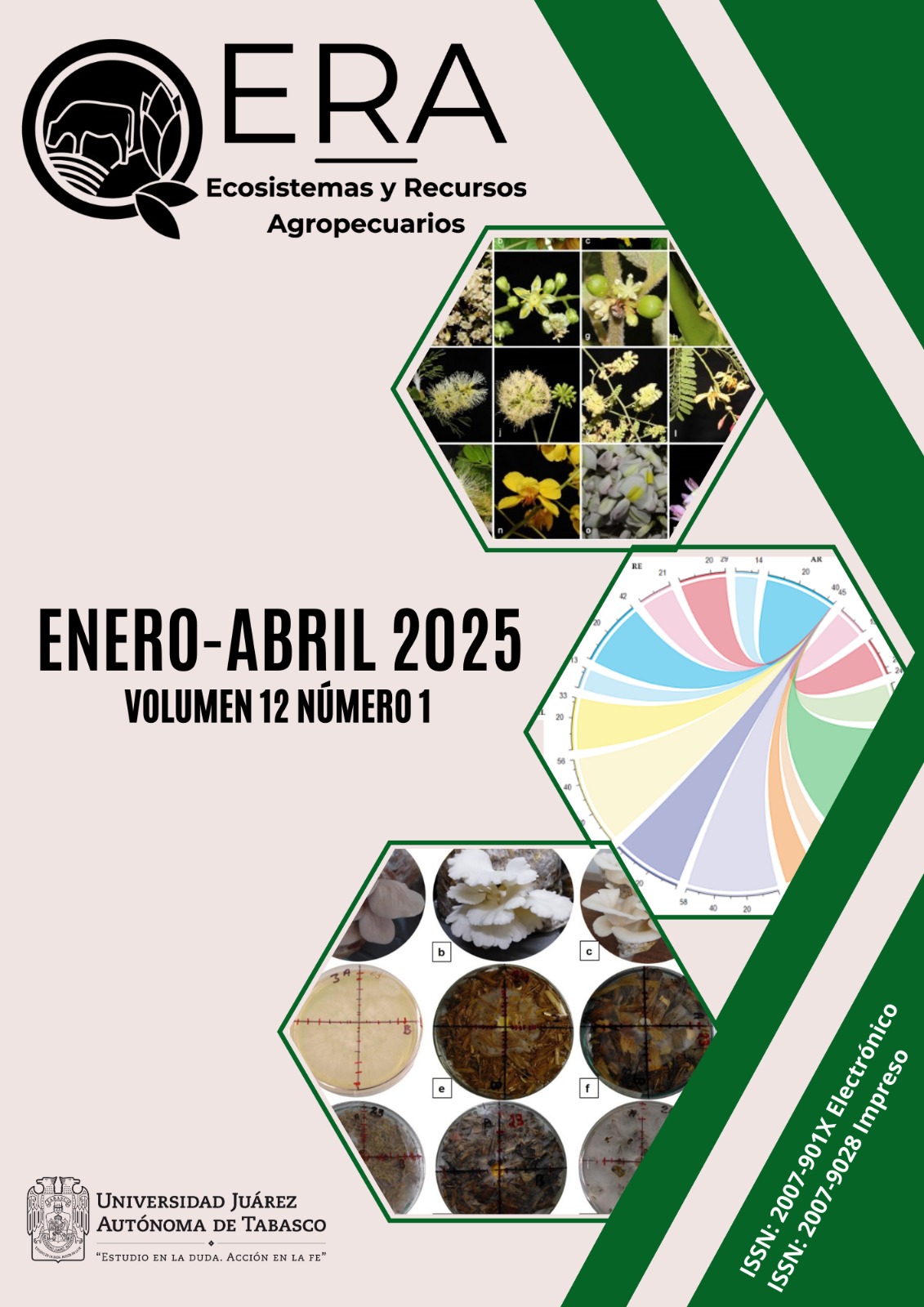
JANUARY-APRIL 2025
Vol. 12 No. 1 (2025)Top photo: Illustration of some forage species found on the Yucatán Peninsula. Image taken from the article: Casanova-Lugo et al. Forage Plants of the Yucatán Peninsula. Material. https://doi.org/10.19136/era.a12n1.4138
Middle photo: Main uses of tree species with forage potential in the Yucatán Peninsula, Mexico. Image taken from the article: Casanova-Lugo et al. Forage Plants of the Yucatán Peninsula: Material. https://doi.org/10.19136/era.a12n1.4138
Bottom photo: Biological material and substrates used to measure the growth rate of Pleurotus djamor strains. Image taken from the article: Aguilar-Ventura et al. Cultivation of Pleurotus djamor in Veracruz, https://doi.org/10.19136/era.a12n1.4115
-
Vol. 11 No. 3 (2024)
Photo tittle: Philostomid bats in restored areas of the Mountain Mesophilic Forest. A shoulder-striped bat (Sturnira lilium) with pollen on its head (top left) and a family of vampire bats (Desmodus rotundus) in a crevice (shelter) near the livestock area.
Photographer: Dr. Ricardo Serna Lagunes; rserna@uv.mx. Bioinformatics and Biostatistics Laboratory; Biological and Agricultural Science Faculty, Orizaba-Córdoba Region, Universidad Veracruzana. www.uv.mx/personal/rserna
1-10 of 105
Next